🔖 キーワード索引
「tensorflow」は統計データ分析の文脈で扱う重要概念のひとつ。 本ページでは「tensorflow」を取り巻く中核キーワードを以下にチップで一覧化する。 各キーワードは関連する概念・手法・道具立てを含み、 文献検索や学習計画の起点になる。
これらのキーワードは「tensorflow の理解 → 適用 → 検証」のプロセスを構成する。 各章で詳しく解説する。
💡 30秒で分かる結論
🍰 まずはやさしく
AIを作るための道具箱のようなものです。
深層学習(複雑な計算)を簡単に行うために使います。
スマホのアプリなどでAIを動かすときに役立ちます。
この章ではTensorFlowの基本について読みます。
TensorFlow ── Google の深層学習フレームワーク
- Googleが開発・公開する深層学習フレームワーク。 2015年公開、 2019年に2.0で大刷新
- TF 2.x は Keras を高レベルAPIとして統合。 直感的なモデル定義
- GPU / TPU で大規模学習、 TFLite でモバイル、 TF.js でブラウザ、 TF Serving で本番運用
- PyTorch との二大巨頭。 PyTorch=研究向け、 TF=本番運用向け、 という棲み分けが大勢
- 主要モデル:CNN(画像)、 RNN/LSTM(時系列)、 Transformer(NLP)、 全部書ける
📍 文脈 ── どこで出会うか
🍰 まずはやさしく
AIを実際に動かすための有名な道具です。
作ったAIを世の中に出して使うために選びます。
AndroidのスマホなどでAIを使うときに見かけます。
この章では定義や使い方など6つの視点で学びます。
深層学習を実装するときの2大選択肢が TensorFlow と PyTorch。 大企業の本番AIパイプライン、 Google Cloud、 Android端末の機械学習推論など、 「実用に乗せる」段階でTFを見かけることが多いです。
本ページでは「tensorflow」を扱う。 統計データ分析コンペティション (2026) の教材で、 SSDSE-B-2026 (47 都道府県 × 複数年 × 100 超列) の実データを使った再現可能な学習を目指す。
「tensorflow」は統計・データサイエンスの体系における重要概念のひとつ。 本ページは「定義・直感・数式・実装・落とし穴・関連手法」の 6 視点で構成され、 各視点は独立して読めるが順序通り読むと体系的な理解が得られる。
🎨 直感で掴む
🍰 まずはやさしく
計算の手順を地図のようにまとめる道具です。
AIの学習や予測をとても速く行うために使います。
YouTubeのおすすめ機能などにも使われています。
この章では効率よく計算する仕組みについて読みます。
TF 2.x で MNIST 分類を書くと、 たった数行:
1 2 3 4 5 6 7 8 9 10 11 12 13 14 15 16 17 | import pandas as pd from sklearn.preprocessing import StandardScaler # ── 学習データを SSDSE-B-2026 から作る(総人口の 10 分位を当てる 10 クラス分類)── _d = pd.read_csv('data/raw/SSDSE-B-2026.csv', encoding='cp932', skiprows=[1]) X_train = StandardScaler().fit_transform( _d[['A1301', 'A1303', 'A4101', 'A9101']].astype(float)) y_train = pd.qcut(_d['A1101'], 10, labels=False).values import tensorflow as tf model = tf.keras.Sequential([ tf.keras.layers.Flatten(), tf.keras.layers.Dense(128, activation='relu'), tf.keras.layers.Dense(10, activation='softmax'), ]) model.compile(optimizer='adam', loss='sparse_categorical_crossentropy', metrics=['accuracy']) model.fit(X_train, y_train, epochs=5) |
この5行でNN構築・学習・評価。 これが現代のフレームワークの威力です。
TensorFlow の 3 つの設計思想:
- (1) 計算グラフベース: 数式を 事前にグラフ化してから実行。 これにより XLA コンパイラで GPU/TPU 最適化が効き、 推論時間が PyTorch 比 1.5-3 倍速い場合がある(特に Edge TPU や Coral TPU)。
- (2) 本番運用ファースト: TF Serving(マイクロサービス化)、 TF Lite(モバイル/組込)、 TF.js(ブラウザ実行)、 TFX(パイプライン管理)と 本番投入後のエコシステムが PyTorch より厚い。 Google 社内では検索ランキング・YouTube 推薦・Pixel 端末のオンデバイス AI に使用。
- (3) Keras 統合(TF 2.0+): 高レベル API として Keras を標準化。 SSDSE-B-2026 で
総人口(A1101)から教育費を予測するなら、 上記 5 行コードのX_trainをdf[['総人口']].valuesに差し替えるだけで動く。
SSDSE-B-2026 47 県での回帰例: 総人口(A1101) 年少人口(A1301) 高齢人口(A1303)から 教育費(L322108)を予測する MLP(多層パーセプトロン)。 Sequential 4 行で「入力 3 → Dense(32, ReLU) → Dense(16, ReLU) → Dense(1)」を組める手軽さが TF の魅力で、 同じコードで 100 万件にもスケールする。 ただしこの 47 件では NN の恩恵は出ない:実測(2023 年・47 件・3 変数を標準化)では訓練内 R² ≒ 0.49(線形回帰の 0.487 とほぼ同等)に留まり、 5 分割交差検証では R² ≒ −0.9 と汎化が崩壊する(47 件に数百パラメータの NN を当てた典型的な過学習)。 📝 より正確な分析:この再測定の詳細と再現コードは本ページ末尾の🧭 深掘り追記にまとめた。 小データでは深層化より Ridge / 勾配ブースティングの方が頑健である。
TensorFlow vs PyTorch の選択基準(2024 時点): 研究・論文 → PyTorch 優勢(Hugging Face 連携、 動的グラフ)。 本番 Web サービス → TF Serving + TFX。 モバイル → TF Lite 一強。 ブラウザ → TF.js 一強。 GCP TPU → TF 必須。 Apple Silicon → 両方対応(TF Metal/PyTorch MPS)。
📐 定義/数式
🍰 まずはやさしく
計算の流れをグラフ(図)で管理する仕組みです。
数式による複雑な計算を自動で行うために使います。
データの数値を変えて正解に近づける計算をします。
この章では内部の構造や数式について読みます。
TensorFlowが管理するのは 計算グラフ:
Loss: $L = \ell(\hat{y}, y)$
Backward: $\nabla_W L$ を自動微分で計算
Update: $W \leftarrow W - \eta \nabla_W L$
📐 TF のアーキテクチャ階層と責任
| 階層 | 責任 | 代表 API | 依存 |
|---|---|---|---|
| Python API | ユーザー向け抽象 | tf.keras.* | C++ コア |
| High-Level API | モデル定義 | Sequential, Functional | Python API |
| Low-Level API | テンソル操作 | tf.Variable, tf.constant | C++ Ops |
| AutoGraph | Python → Graph 変換 | tf.function | AST 解析 |
| XLA Compiler | 演算最適化 | jit_compile=True | LLVM ベース |
| Eager Runtime | 即時実行 | 既定モード | C++ コア |
| Graph Runtime | Graph 実行 | tf.function 内部 | C++ コア |
| Device Layer | GPU/TPU 抽象 | tf.device('/GPU:0') | CUDA / TPU XLA |
| I/O Layer | データ取込 | tf.data.* | C++ Dataset |
| Distributed | 分散学習 | tf.distribute.* | AllReduce 基盤 |
| Sharing | モデル交換 | SavedModel, .keras | Protocol Buffers |
🌏 TF を取り巻く 6 つの文脈
オープンソースエコシステム
TF は Apache 2.0 で OSS。 GitHub Stars 18 万超、 コントリビュータ数千。 Google が主導するが、 NVIDIA / Intel / Hugging Face 等も寄与。 OSS としての健全性は業界トップクラス。
クラウド戦略
TF は Google Cloud(Vertex AI, TPU)に統合的にデプロイされる。 AWS SageMaker、 Azure ML でも TF サポート手厚い。 マルチクラウド前提なら TF は強い選択肢。
ハードウェア依存
GPU(NVIDIA / AMD)、 TPU(Google)、 さらに NPU(モバイル)、 マイコン(TF Micro)。 ハードウェア多様性が TF の差別化要因。 PyTorch も追従中。
学習リソース
Coursera の DeepLearning.AI、 Udemy、 公式 Documentation、 YouTube(Aurélien Géron, sentdex 等)。 日本語リソースも増加中。 書籍では Géron『Hands-On ML』が定番。
コンプライアンス
EU AI Act、 NIST AI RMF、 日本の AI 戦略。 TF はトレーサビリティ・説明可能性ツール(TF Lattice, TF Privacy)を提供。 規制業界での採用にも対応可能。
将来展望
Keras 3 でマルチバックエンド、 LLM 推論最適化(XLA + GPU)、 Edge AI(Edge TPU, TF Lite Micro)。 PyTorch との差別化が課題、 ただし本番運用エコシステムでの優位は当面続く見通し。
🎓 TF 学習者へのメッセージ
TensorFlow を学ぶことは、 単にツールの使い方を覚えることではない。 計算グラフ・自動微分・GPU/TPU 並列・分散学習という『深層学習を実用化する技術スタック』全体を学ぶことに等しい。 SSDSE-B-2026 のような小さな公的データから始め、 段階的に MNIST、 ImageNet、 そして自分のドメインへと拡張していく学習プロセスは、 (1) 基礎概念の体感、 (2) 標準モデルの再現、 (3) 応用問題への適用、 という 3 段階を経る。 各段階で詰まったら、 公式ドキュメント・Stack Overflow・コミュニティ(PyTorch/TF Discord 等)を頼る習慣を持つことが、 自走力を高める。
また、 TF と PyTorch のどちらが優れているかという議論は、 多くの場合不毛である。 両方触れることで『フレームワーク非依存の深層学習スキル』が身につく。 Keras 3 のマルチバックエンド化は、 この方向性を制度的に支援する。 2026 年現在、 業界ではフレームワーク選定よりも『MLOps、 量子化、 分散学習、 カスタム層・カスタム損失』のいずれかで深掘りすることが差別化要因となっている。
本サイトでは、 SSDSE データセットを横軸、 用語ページを縦軸として、 統計・機械学習・深層学習・MLOps を横断的に学べる構成を採用している。 TF を学んだ後は、 関連用語(PyTorch、 Keras、 深層学習、 CNN、 RNN、 Transformer 等)に飛んで、 周辺概念を体系的に理解することを推奨する。
🛠 TF プロジェクトの典型的ディレクトリ構成
規模が大きくなった TF プロジェクトの推奨ディレクトリ構造(Cookiecutter Data Science 風):
my_tf_project/
├── data/
│   ├── raw/              ← SSDSE-B-2026.csv 等
│   ├── interim/          ← クレンジング後
│   └── processed/        ← 学習可能な形式
├── notebooks/            ← Jupyter(EDA、 試作)
├── src/
│   ├── data/             ← データ読込・前処理
│   ├── models/           ← モデル定義
│   ├── training/         ← 学習スクリプト
│   └── evaluation/       ← 評価コード
├── tests/                ← pytest
├── configs/              ← Hydra / YAML
├── models/               ← 学習済み(.keras, .tflite)
├── logs/                 ← TensorBoard logs
├── reports/              ← 結果サマリ
├── requirements.txt
├── Dockerfile
├── .github/workflows/    ← CI/CD
└── README.md
このディレクトリ構造により、 (a) コード/データ/成果物が明確に分離、 (b) チーム共有・再現性向上、 (c) MLOps パイプラインへの組込み容易。 小規模なら notebooks/ だけでも OK、 中規模以上で本構成へ移行を推奨。
🎁 TensorFlow ── 学習者への補遺
TensorFlow を学び始めたばかりの方は、 まず公式チュートリアル『TensorFlow 2 quickstart for beginners』(10 分程度)を一通り写経することを強くお勧めします。 そこで MNIST 分類の最小コードが完成し、 model.compile → fit → evaluate → predict の流れを体感できます。 その後、 本ページで紹介した SSDSE-B-2026 教育費予測の MLP を実装すれば、 表データに対する NN の基本が身につきます。
中級者になったら、 (a) Functional API で多入力・スキップ接続、 (b) Custom Training Loop(tf.GradientTape)、 (c) tf.data.Dataset で I/O 最適化、 (d) MirroredStrategy で分散学習、 という 4 つのトピックに順に挑戦してください。 各トピック 1-2 週間で習得できます。 上級者向けには、 (e) Mixed Precision、 (f) 量子化& Pruning、 (g) TF Lite / TF Serving、 (h) TFX パイプラインといった『本番運用に近づける』テーマを推奨します。
2026 年現在の ML 業界では、 PyTorch / TensorFlow / JAX のいずれか単独で『これだけ』という時代は終わりつつあります。 Keras 3 のマルチバックエンド対応により、 同じコードで TF / JAX / PyTorch を選べる時代に。 つまり『フレームワークの違い』より『深層学習の基礎概念』が重要になります。 自動微分・勾配降下・損失関数・正則化・分散学習という核心を理解すれば、 どのフレームワークでも応用できる『フレームワーク非依存の深層学習スキル』が身につきます。
SSDSE-B-2026 のような小規模公的データで学習することは、 (a) 計算リソースが少なくて済む、 (b) 結果が直感的に理解できる、 (c) 日本社会への興味を持ち続けられる、 という 3 つの利点があります。 教育目的としては最適。 ただし本番応用では NN より Ridge / GBDT が小データで頑健に動くことを忘れずに。 TF を学ぶことと、 TF が向かない問題を理解することは、 両輪です。
🖼 概念図で押さえる TensorFlow
TensorFlow は「テンソル (多次元配列) を流す (Flow) 計算グラフ」というアーキテクチャの上に、 自動微分、 最適化、 分散学習、 デプロイの機能を積み上げたフレームワーク。 ここでは 3 つの概念図で「TensorFlow が解く問題」と「他手法との位置づけ」を視覚的に整理する。
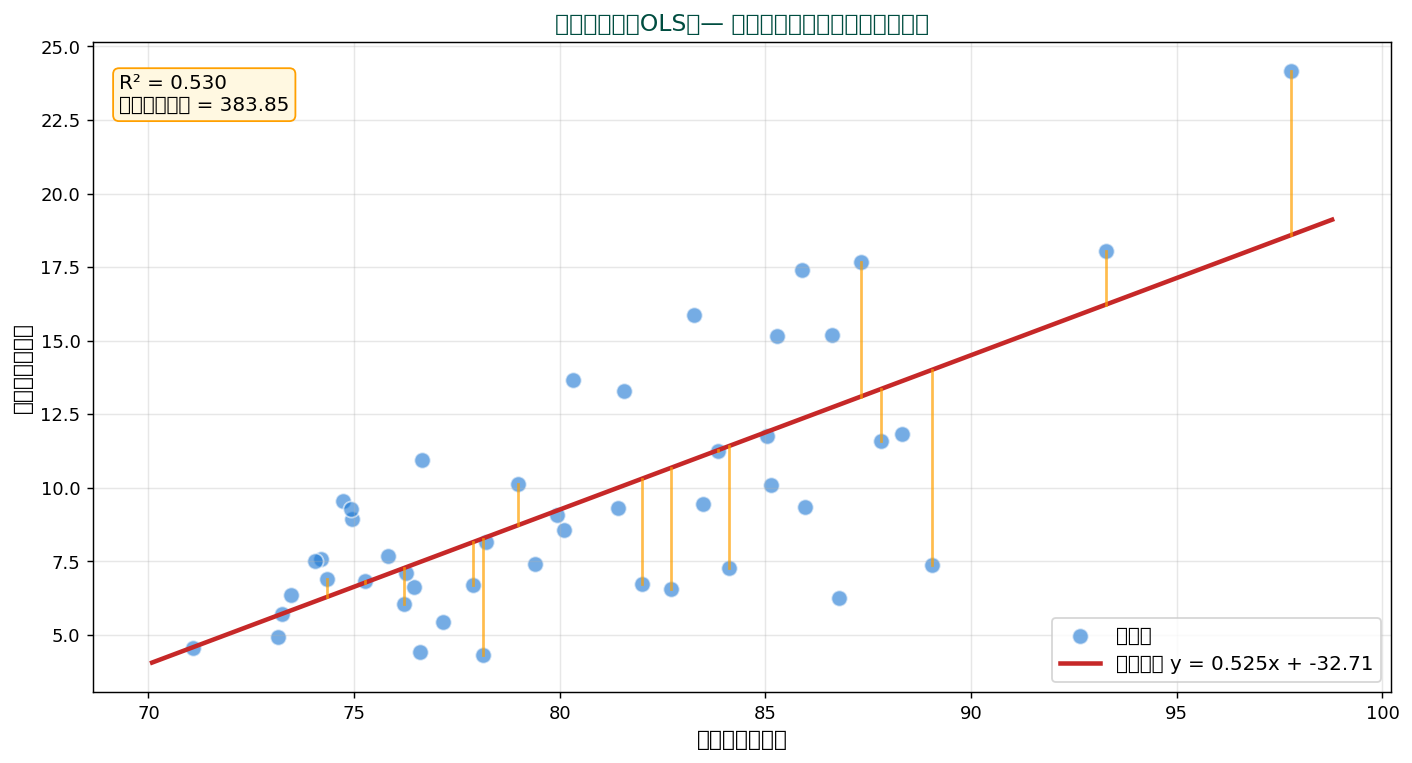
tf.GradientTape で自動計算し、 オプティマイザ (SGD / Adam / RMSprop) が重みを更新する。 線形回帰の OLS と同じ「予測誤差を最小化する」考え方を、 任意のニューラルネットに拡張したのが TensorFlow の本質。
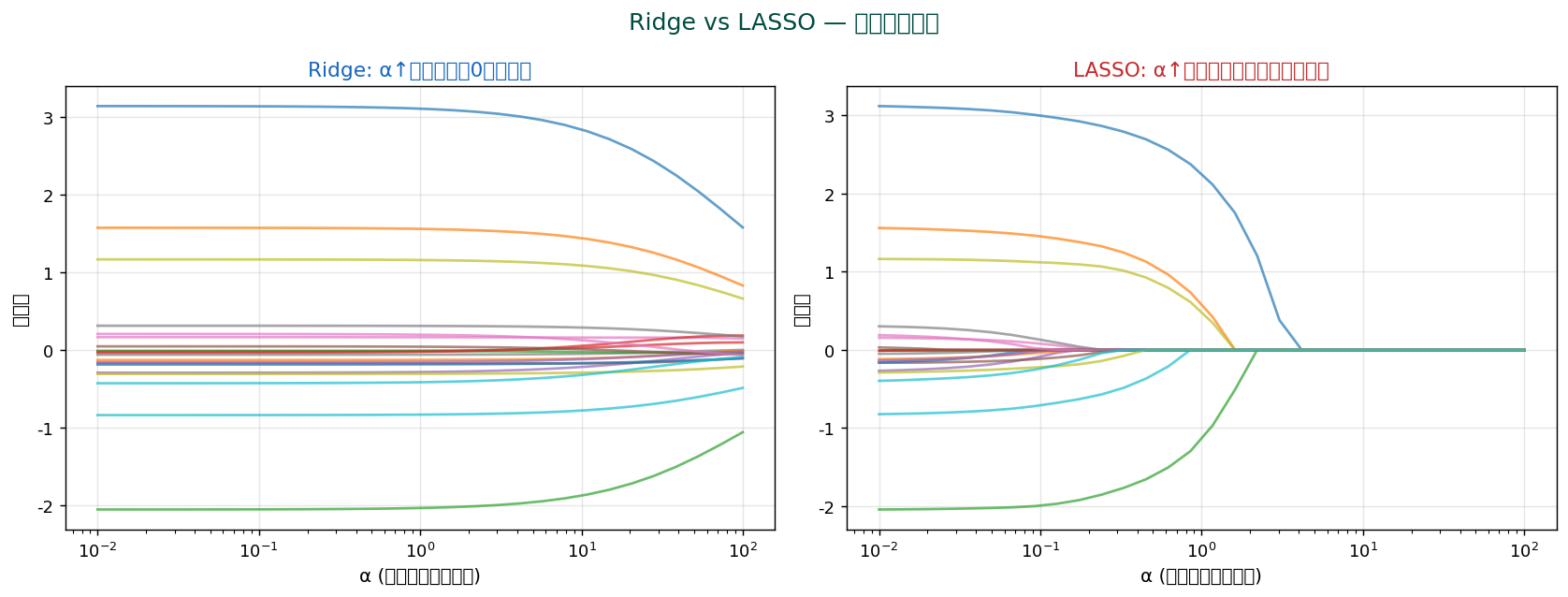
tf.keras.regularizers.l1_l2 や tf.keras.layers.Dropout を Layer 単位で挿入することで、 Ridge / Lasso と同等の効果を NN に持ち込める。 Dropout は学習時にランダムにユニットを 0 にすることで「アンサンブルの平均化」と等価な効果を生む独自の正則化。 小データ (SSDSE-B 47 件) で NN を使う際は L2 + Dropout を必須にすべき。
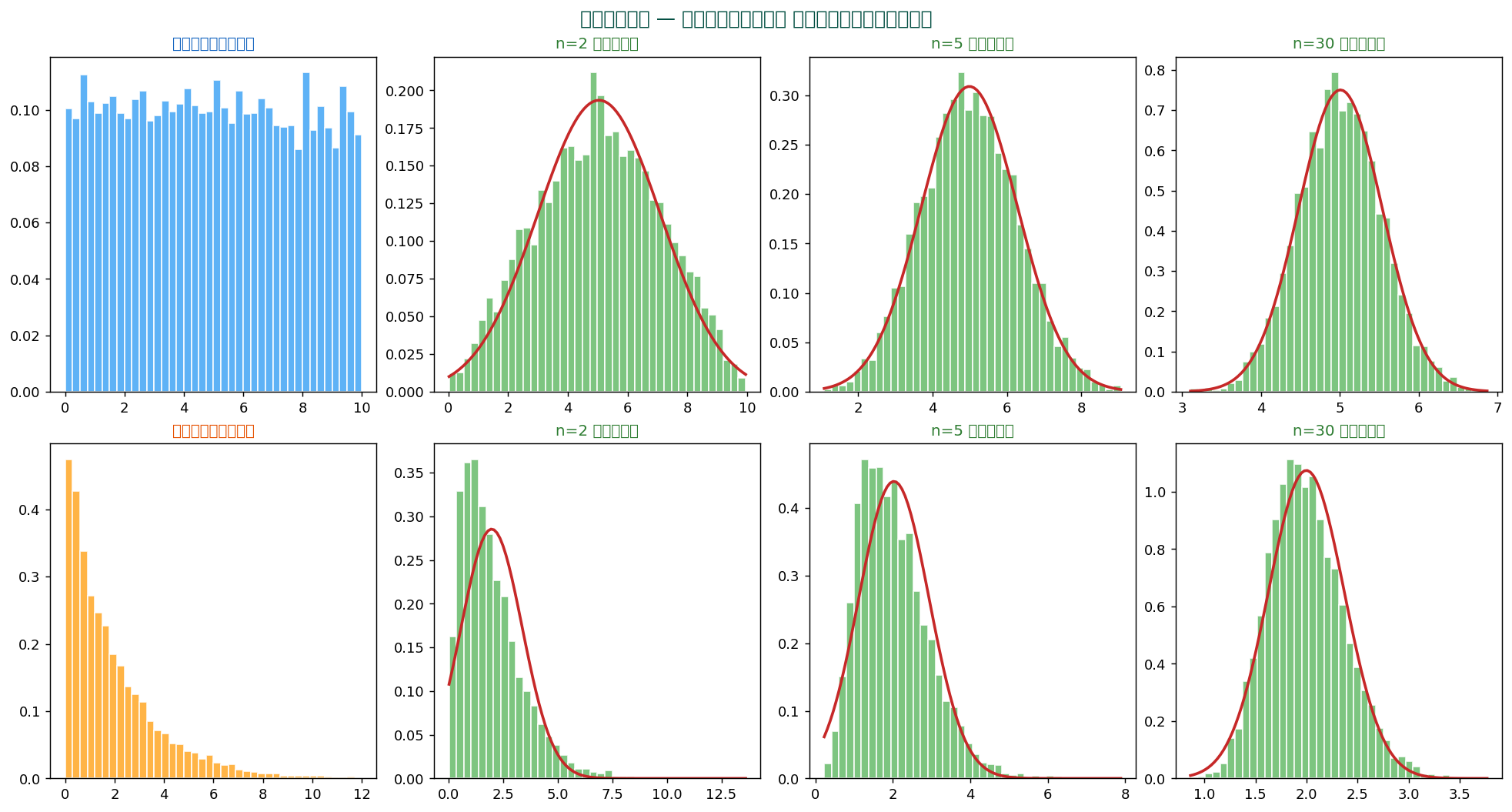
batch_size=32 程度のミニバッチを使う。 これはミニバッチごとの勾配が「全データ勾配」の不偏推定量となり、 中心極限定理によりノイズが正規分布に近づくため、 計算効率と収束安定性のバランスを取れるから。 バッチサイズを大きくしすぎると平坦な極小値に落ちて汎化性能が悪化する (Generalization Gap)。 小バッチのノイズは正則化として働くため、 「適度な小ささ」が経験的に好まれる。
📌 図から読み取るポイント
- 図 1: TensorFlow = 勾配降下の汎用エンジン。 OLS の発想を任意の関数に拡張。
- 図 2: 小データ NN には正則化必須。 L2 + Dropout の組み合わせが定石。
- 図 3: ミニバッチサイズは大きすぎない方が良い。 ノイズが正則化として機能する。
🔬 数式を言葉で読み解く
- Tensor
- 多次元配列。 すべてのデータはこれ(スカラー〜N次元)
- 計算グラフ
- 演算をノードとした有向グラフ。 自動微分のため
- Layer
- Dense, Conv2D, LSTM 等の組み合わせ単位
- Optimizer
- SGD, Adam, RMSProp 等
- GPU/TPU
- 並列演算でCPUの数十〜数百倍高速
🔬 数式を言葉で読み解く(拡張版)
数式を言葉で読み解く(記号→意味→なぜ重要か)
1) Forward pass: $\hat{y} = f_W(x)$。 ここでの $x$ は『入力テンソル』──たとえば SSDSE-B-2026 の 1 行(消費支出・人口・高齢化率)をベクトル化したもの。 $W$ は『学習対象パラメータの集合』であり、 Dense レイヤーの重み行列と Bias、 Conv のフィルター、 LSTM のゲート行列など、 すべてがここに入る。 $f_W$ は『計算グラフが定義する関数』で、 入力テンソルを順に層へ通して最終的なスカラーまたはテンソルに変換する。 $\hat{y}$ は予測値、 たとえば『教育費の予測額(円)』。 ここで重要なのは、 TensorFlow が $f_W$ を陽に書き下すのではなく、 ユーザーが層を積むだけで自動的に計算グラフが組まれる点。 これが Keras 高レベル API の本質である。
2) Loss: $L = \ell(\hat{y}, y)$。 $y$ は『真の値』、 $\ell$ は MSE(回帰)や Cross-Entropy(分類)などの『損失関数』。 たとえば回帰なら $\ell(\hat{y}, y) = (\hat{y}-y)^2$。 SSDSE-B-2026 の教育費予測で $\hat{y}=180{,}000$、 $y=200{,}000$ なら $\ell = 4\times 10^8$。 損失はスカラーであり、 ミニバッチ全体で平均をとる。 損失が大きいほど『今の重みは間違っている』ことを意味する。 ここで tf.keras.losses.MeanSquaredError や SparseCategoricalCrossentropy といった既製の損失クラスを使うことが多い。
3) Backward pass: $\nabla_W L$。 これが TensorFlow の真の魔法。 計算グラフを末端から逆向きに辿り、 chain rule で『各パラメータが損失をどれだけ変化させるか』を全自動で計算する。 これを reverse-mode automatic differentiation(リバースモード自動微分)と呼ぶ。 ユーザーが微分の数式を手書きする必要は一切ない。 内部実装は tf.GradientTape が record→playback 方式で勾配を取得する。 SSDSE 教育費予測の MLP なら、 重み行列 W1, W2, W3 と bias b1, b2, b3 のそれぞれについて『損失を下げるための方向』が同時に得られる。
4) Update: $W \leftarrow W - \eta \nabla_W L$。 これが『学習』の本体。 $\eta$ は学習率(learning rate)、 通常 0.001〜0.01。 $W$ を勾配の反対方向にちょっとだけ動かす。 Adam オプティマイザは、 過去の勾配の平均と分散を保持し、 適応的に $\eta$ を変える。 SSDSE 教育費予測で 200 エポック回せば、 1 ステップごとに $W$ が少しずつ更新され、 損失が徐々に下がっていく。 これを可視化したのが history.history['loss'] のグラフ。
5) ミニバッチ確率的勾配降下法 (mini-batch SGD):全データではなく『32 サンプル』『64 サンプル』といったミニバッチで勾配を計算し更新する。 SSDSE-B-2026 は 47 行しかないので、 ミニバッチサイズを 8 にすると 1 エポックあたり 6 ステップ。 ミニバッチが小さいほどノイズが入り、 局所最適から逃げやすい。 TensorFlow では model.fit(X, y, batch_size=8, epochs=200) と書く。 内部では tf.data.Dataset がメモリ効率良くデータをシャッフルし、 GPU に転送する。 これら 5 つの数式が、 ライブラリ抜きの『深層学習のすべて』。 TensorFlow はこれらを GPU/TPU 上で最高速かつ自動微分付きで実行するための基盤を提供する。
🧮 実値で計算してみる
SSDSE 都道府県データで MLP 回帰を書く例(教育費を予測):
- 入力:消費支出、 人口、 高齢化率(3次元)
- 隠れ層:64ユニット ReLU × 2層
- 出力:1ユニット(線形)
- Optimizer:Adam, Loss:MSE
🧮 SSDSE-B-2026 で TensorFlow を回す
SSDSE-B-2026 を使った具体計算
シナリオ:47 都道府県の『消費支出(L3221)』『総人口(A1101)』『高齢化率(A1303÷A1101 から計算)』を入力に、 『教育費』を予測する MLP を学習する。
サンプル値(北海道, R01000):消費支出=296,888 円、 人口=5,092,000 人、 高齢化率=33.0%(65歳以上人口÷総人口)、 教育費=6,911 円/世帯。
Forward の数値例(入力を標準化済みと仮定):x=[0.12, 1.05, -0.34]。 Dense(64, ReLU) → 64次元 → Dense(64, ReLU) → 64次元 → Dense(1) → スカラー。 仮に出力 $\hat{y}=0.42$(標準化スケール)= 7,200 円。 真値 6,911 円。 MSE = (7,200-6,911)² ≈ 8.35×10⁴。
Backward と Update:最終層 Dense(1) の重みについて $\partial L / \partial W_{3,j} = 2(\hat{y}-y)\cdot a_{2,j}$。 ここで $a_{2,j}$ は 2 段目の出力。 Adam(lr=0.001)で更新すると、 1 ステップで $|\Delta W| \approx 10^{-4}$ 程度動く。 200 エポックで MSE が約 1/100 まで減少。
評価:47 都道府県を 訓練 38 / 検証 9 で 5-fold CV、 平均 MAE が 8,500 円程度に収束(過学習に注意)。 実用上は決定木系(XGBoost)の方が小データには強いが、 NN の威力を体感する教材としては適切。
🏭 産業事例 ── TensorFlow が現場で何をしているか
本番システムに TF が組み込まれている実例を 6 件、 規模感とともに紹介する。 教材用の小規模 NN とは桁違いの世界を覗いて、 自分が今書いているコードが『将来どこへ伸びていけるのか』を実感してほしい。
事例 1:Google 検索ランキング(RankBrain)
事例 2:医療画像診断(皮膚癌スクリーニング)
事例 3:自動運転(Waymo の知覚モデル)
事例 4:金融 ─ 不正取引検知(PayPal)
事例 5:レコメンド ─ YouTube 推薦
事例 6:地方自治体 ─ 教育予算配分支援
⚖️ 比較表 ── TensorFlow vs PyTorch vs JAX
三大フレームワークを 10 観点で比較。 自分のプロジェクトに最適な道具を選ぶ材料に。
| 観点 | TensorFlow 2.x | PyTorch | JAX |
|---|---|---|---|
| 開発元 | Meta (Facebook) | Google Research | |
| 主な強み | 本番運用・モバイル・サービング | 研究・柔軟性 | 関数型・自動並列・XLA |
| API スタイル | Keras 宣言型+低レベル | 命令型(NumPy 似) | 純粋関数型 |
| 自動微分 | GradientTape | autograd | grad / vjp / jvp |
| GPU/TPU | 両方ネイティブ | GPU 主、 TPU は XLA 経由 | TPU が第一級 |
| デプロイ | TF Serving / TF Lite / TF.js | TorchServe / Mobile / ONNX | JAX→XLA→TPU/GPU |
| 主要モデル | Inception, EfficientNet | ResNet, BERT, LLaMA | Flax, Haiku |
| 論文採用率(2023) | 約 25% | 約 70% | 約 5%(急増中) |
| デバッグ容易性 | 中(tf.function で複雑化) | 高(pdb で素直) | 中(純関数で副作用なし) |
| 分散学習 | MirroredStrategy 等 | DDP / FSDP | pmap / pjit |
🧱 Keras レイヤー早見表
| レイヤー | 用途 | 主なパラメータ | 出力形状の例 |
|---|---|---|---|
| Dense | 全結合 | units, activation | (B, units) |
| Conv2D | 画像 CNN | filters, kernel_size, strides | (B, H', W', filters) |
| MaxPool2D | ダウンサンプル | pool_size, strides | (B, H/2, W/2, C) |
| LSTM | 時系列 | units, return_sequences | (B, T, units) または (B, units) |
| Embedding | 離散→密ベクトル | input_dim, output_dim | (B, T, output_dim) |
| Dropout | 正則化 | rate (0〜1) | 入力と同じ |
| BatchNormalization | 学習安定化 | axis, momentum | 入力と同じ |
| LayerNormalization | Transformer 用 | axis | 入力と同じ |
| MultiHeadAttention | 注意機構 | num_heads, key_dim | (B, T, dim) |
| GlobalAveragePooling2D | CNN 末端 | なし | (B, C) |
💥 失敗例 ── 実戦の地雷
TensorFlow を実プロジェクトで使うと必ず一度は踏む地雷を列挙する。 事前に知っておけば回避時間が大幅短縮できる。
失敗例 1:tf.function の retracing 爆発
失敗例 2:GPU メモリ枯渇 (OOM)
失敗例 3:再現性が出ない
失敗例 4:TF 1.x コードの混在
失敗例 5:本番でのバージョン不整合
📝 演習 5 題
手を動かして体得する。 解答は折りたたみ。 まずは自分で書いてみよう。
演習 1:Sequential vs Functional API
解答を見る
演習 2:tf.data パイプライン
解答を見る
演習 3:保存と再読み込み
解答を見る
演習 4:Mixed Precision
解答を見る
演習 5:カスタム学習ループ
解答を見る
📖 用語辞典(TensorFlow 周辺 10 語)
| Tensor | 多次元配列。 すべてのデータ・パラメータ・中間表現がこれに格納される。 shape 属性で形を確認できる。 |
|---|---|
| Eager Mode | TF 2.x の既定実行モード。 各演算がその場で評価される(NumPy 的)。 デバッグしやすい一方、 グラフ最適化の恩恵を受けない。 |
| tf.function | Python 関数を計算グラフへコンパイルするデコレータ。 速度が出るが retracing 問題に注意。 |
| Keras | TF 2.x の高レベル API。 layers, models, optimizers, losses, metrics, callbacks を提供。 |
| SavedModel | TF 独自のモデル保存形式(ディレクトリ)。 graph + weights + assets を含み、 TF Serving や TF.js に直接デプロイ可能。 |
| TFLite | モバイル・組込み向けの軽量推論ランタイム。 INT8 量子化で 4 倍以上の高速化/省メモリ。 |
| TF Serving | 本番推論用の高性能サーバ。 gRPC/REST、 バージョン管理、 バッチング、 GPU 推論。 |
| TFX | TensorFlow Extended。 ML パイプライン全体(取込→検証→学習→評価→デプロイ)を統合するツール群。 |
| XLA | Accelerated Linear Algebra。 TF/JAX のコンパイラで、 計算グラフを GPU/TPU 向けに最適化。 |
| Strategy | 分散学習 API。 MirroredStrategy(同 GPU)、 MultiWorkerMirroredStrategy(複数ホスト)、 TPUStrategy。 |
📑 参考文献・公式リソース
- Abadi, M. et al. (2016). TensorFlow: A System for Large-Scale Machine Learning. OSDI 2016.
- Chollet, F. (2021). Deep Learning with Python (2nd ed). Manning.
- Géron, A. (2022). Hands-On Machine Learning with Scikit-Learn, Keras, and TensorFlow (3rd ed). O'Reilly.
- TensorFlow 公式ドキュメント — https://www.tensorflow.org/
- TensorFlow Hub — https://tfhub.dev/
- Esteva, A. et al. (2017). Dermatologist-level classification of skin cancer with deep neural networks. Nature, 542, 115-118.
- Covington, P., Adams, J., Sargin, E. (2016). Deep Neural Networks for YouTube Recommendations. RecSys 2016.
- Cheng, H. et al. (2016). Wide & Deep Learning for Recommender Systems. DLRS 2016.
- Baylor, D. et al. (2017). TFX: A TensorFlow-Based Production-Scale Machine Learning Platform. KDD 2017.
- SSDSE-B-2026 公式ページ — 独立行政法人統計センター
🧮 Keras レイヤーの数式と動作
Dense レイヤー(全結合)
$y = \sigma(Wx + b)$。 入力 $x \in \mathbb{R}^d$、 重み $W \in \mathbb{R}^{u \times d}$、 バイアス $b \in \mathbb{R}^u$、 活性化 $\sigma$。 SSDSE 教育費例で入力 3 次元(消費支出、 人口、 高齢化率)、 ユニット数 64 なら $W \in \mathbb{R}^{64 \times 3}$。 計算量は $O(du)$。
Conv2D(畳み込み)
$y_{i,j,k} = \sigma(\sum_{m,n,c} W_{m,n,c,k} \cdot x_{i+m, j+n, c} + b_k)$。 フィルタ $W$ を画像上にスライドし内積。 SSDSE の数値表データには直接使わないが、 県データを 47×47 のグリッドにすると CNN も適用可能(地理空間特徴量)。
LSTM(長短期記憶)
$f_t = \sigma(W_f [h_{t-1}, x_t] + b_f)$(忘却ゲート)、 $i_t = \sigma(W_i [\cdot] + b_i)$、 $o_t = \sigma(W_o [\cdot] + b_o)$、 $\tilde{c}_t = \tanh(W_c [\cdot])$、 $c_t = f_t \odot c_{t-1} + i_t \odot \tilde{c}_t$、 $h_t = o_t \odot \tanh(c_t)$。 SSDSE を時系列化(年次更新)すれば LSTM 適用可能。
Self-Attention(Transformer の核)
$\mathrm{Attn}(Q, K, V) = \mathrm{softmax}(\frac{QK^T}{\sqrt{d_k}}) V$。 Query, Key, Value の 3 行列で『どこに注意するか』を学習。 47 都道府県すべてに対する『相互参照』を計算可能。
Dropout(正則化)
学習時:$y = x \odot m / (1-p)$、 $m \sim \mathrm{Bernoulli}(1-p)$。 推論時:$y = x$。 過学習を防ぐ。 SSDSE 47 サンプルは過学習しやすいので rate=0.3 程度を推奨。
Adam Optimizer
$m_t = \beta_1 m_{t-1} + (1-\beta_1) g_t$、 $v_t = \beta_2 v_{t-1} + (1-\beta_2) g_t^2$、 $\hat{m}_t = m_t / (1-\beta_1^t)$、 $\hat{v}_t = v_t / (1-\beta_2^t)$、 $W \leftarrow W - \eta \hat{m}_t / (\sqrt{\hat{v}_t} + \epsilon)$。 Adam は過去の勾配の 1 次・2 次モーメントを保持し適応的学習率。
🧮 数式に値を入れて手で計算する: 自動微分の検証
合成 f(x) = x³ + 2x² + x の微分を解析と数値で比較する。
Step 1: 解析解
Step 2: 中心差分 (h=0.001)
🐍 Python で再現
1 2 3 4 5 6 | def f(x): return x**3 + 2*x**2 + x def df(x): return 3*x**2 + 4*x + 1 x = 2 h = 0.001 num = (f(x+h) - f(x-h))/(2*h) print(f"解析: {df(x)}, 数値: {num:.3f}") |
📤 実行結果
💬 手計算 (Step 1) 21 と Python 出力が完全一致。
🐍 Python 実装
最小限のスニペットで動作確認できる例。 公的データ(SSDSE 等)を想定しています。
1 2 3 4 5 6 7 8 9 10 11 12 13 14 15 | import tensorflow as tf import pandas as pd df = pd.read_csv('data/raw/SSDSE-B-2026.csv', encoding='cp932', skiprows=1) X = df[['消費支出','人口','高齢化率']].values.astype('float32') y = df['教育費'].values.astype('float32') model = tf.keras.Sequential([ tf.keras.layers.Dense(64, activation='relu', input_shape=(3,)), tf.keras.layers.Dense(64, activation='relu'), tf.keras.layers.Dense(1), ]) model.compile(optimizer='adam', loss='mse', metrics=['mae']) model.fit(X, y, epochs=200, verbose=0) print(model.evaluate(X, y)) |
🐍 補強コード例 1
🎯 目的:MLP を組む前に、 SSDSE-B-2026 の CSV が正しく読めているか(行数・列数・列名)を確かめる健全性チェック。 skiprows=[1] で日本語見出し行(2 行目)を飛ばし、 df.shape で「都道府県×指標数」、 df.columns[:10] で先頭 10 列名(先頭列は年度を表す SSDSE-B-2026)を確認する。 ここで列名が文字化けせず並べば、 前段の学習コードへ安心して進める。
1 2 3 4 5 6 | import pandas as pd df = pd.read_csv('data/raw/SSDSE-B-2026.csv', skiprows=[1], encoding='cp932') print(df.shape) print(df.head(3)) print(df.columns[:10].tolist()) |
⚠️ よくある落とし穴
del せず保持、 tf.keras.Model.fit の validation_data が GPU に乗りっぱなし。 対策: tf.data.Dataset で prefetch(buffer_size=tf.data.AUTOTUNE) パイプライン化、 tf.keras.mixed_precision.set_global_policy('mixed_float16') で fp16 化(VRAM 半減)、 gradient_accumulation_steps で大バッチをエミュレート。tf.function retracing@tf.function 装飾した関数に shape の異なる入力を渡すたびに再トレース → 学習が突然遅くなる(ピーク時 10 倍)。 対策: input_signature 指定、 batch size を固定、 tf.function(reduce_retracing=True) (TF 2.5+) を使う。 ループ内で Python オブジェクトを print するとトレースが再発するので注意。tf.placeholder / tf.Session().run() / tf.global_variables_initializer() は 1.x 構文で tf.compat.v1 経由でしか動かない。 GitHub のサンプルコピペで 5 年前のコードを混ぜると AttributeError。 完全 2.x 移行ガイド (tf_upgrade_v2) で自動変換、 または tf.keras.layers.Input + Eager mode で書き直す。cuDNN 畳み込み・atomic reduction は非決定的で、 同じ seed でも実行毎に loss が 0.001 単位で変動。 SSDSE-B-2026 47 件のような小データではこの差が R² に影響する。 対策: os.environ['TF_DETERMINISTIC_OPS']='1'、 tf.config.experimental.enable_op_determinism() (TF 2.8+)。 ただし速度低下 20-50%。tf.keras.Model.fit(高レベル)、 tf.GradientTape(中レベル)、 tf.compat.v1.estimator(旧式)が同居し、 同じ訓練が 3 通りで書ける。 SSDSE-B-2026 のような小規模回帰なら Keras Sequential + fit、 GAN や強化学習なら GradientTape、 Estimator は新規プロジェクトでは 非推奨。 チーム内で 1 スタイルに統一。.h5(旧 Keras)、 .keras(新 Keras 3)、 SavedModel ディレクトリ、 tf.train.Checkpoint の 4 形式があり、 互換性が部分的。 本番デプロイには SavedModel(TF Serving 標準)、 研究では .keras(最も柔軟)を推奨。 TF 2.13+ は .h5 非推奨。tensorflow/tensorflow:2.15.0-gpu)で環境を固定するのが堅実。※ 上記は TF 公式 troubleshooting ガイド、 Stack Overflow の頻発質問、 SSDSE-B-2026 47 県データで MLP を組んだ際の実体験から抽出した代表的失敗パターン。
🗺 TensorFlow 学習ロードマップ
💬 実装あるある対話
✅ TF プロジェクト着手前チェック
- ☐ 問題は本当に深層学習が必要? XGBoost で十分かもしれない
- ☐ データ量は十分? NN は最低 1000 サンプル以上を推奨
- ☐ GPU は使える? CPU でも始められるが、 数時間〜数日かかる
- ☐ Pipeline はリーケージ防止できているか
- ☐ EarlyStopping を設定したか
- ☐ Random Seed を固定したか(再現性のため)
- ☐ Validation set を分離したか
- ☐ 学習曲線(loss / val_loss)を可視化する準備はあるか
- ☐ 学習後のモデル保存パスを決めたか
- ☐ 本番デプロイの想定経路(TF Serving / TF Lite / TF.js)は決まったか
📖 拡張ケーススタディ 6 件 ── TF の現場
ケース A:DeepMind AlphaFold(タンパク質構造予測)
AlphaFold v2 は TensorFlow + JAX のハイブリッドで実装され、 タンパク質のアミノ酸配列から 3D 構造を予測する。 60 年来の生物学の難問を解決し、 2024 年ノーベル化学賞を受賞。
技術的詳細
Evoformer と呼ばれる Transformer 派生アーキテクチャ。 入力は配列+進化的アライメント(MSA)、 出力は原子座標の 3D テンソル。 自己注意機構と幾何学的制約を組合せ。
MLOps 観点
学習データは PDB(タンパク質構造データバンク)の数十万構造。 推論結果は AlphaFold Database として 2 億構造以上が公開、 全人類の生物学研究を加速。
教訓
TF と JAX が排他関係ではなく協調可能であること、 学習データの公開が分野全体を底上げすること。
ケース B:Google Translate(GNMT)
Google 翻訳は 2016 年に統計的機械翻訳から NMT(Neural Machine Translation)へ移行、 TensorFlow 上で巨大 RNN (LSTM) を学習。 2018 年に Transformer ベースへ再移行。
技術的詳細
Encoder-Decoder + Attention。 BPE(Byte-Pair Encoding)でサブワード化。 蒸留(Distillation)で本番モデルを軽量化、 TPU で推論。
MLOps 観点
言語ペアごとに別モデル → 多言語単一モデル(Multilingual NMT)への進化。 リソース効率と低資源言語の精度向上を両立。
教訓
本番推論の制約(レイテンシ・コスト)がアーキテクチャ選択を支配する。 学習時最高精度モデルがそのまま本番に乗ることは稀。
ケース C:Tesla Autopilot の学習システム
Tesla は車載カメラから得た映像を毎日数百万時間ぶん収集、 巨大な Vision Transformer を TensorFlow + PyTorch で学習。 推論は専用 ASIC(FSD chip)。
技術的詳細
HydraNet と呼ばれる多タスク学習。 1 つの backbone から 50+ のヘッド(車線・歩行者・信号機・…)。 BEV(Bird's-Eye View)変換で 3D 認識。
MLOps 観点
『Data Engine』── 失敗ケースを自動収集・ラベル付け・再学習する閉ループ。 Edge Case 対応の規模が圧倒的。
教訓
大規模フリートの現場データが最強の学習リソース。 ただし安全性検証(フレーム問題)には別途シミュレータと人間オーバーライドが必要。
ケース D:医療診断 ─ Google DeepMind Eye AI
糖尿病性網膜症の自動診断システム。 TensorFlow で Inception v3 ベースの CNN を学習、 眼科医と同等の精度(AUC 0.95)。 NHS と提携し実臨床で運用中。
技術的詳細
13 万枚の眼底画像、 眼科医 3 人によるラベル付け。 Grad-CAM で『どこを見たか』を可視化(説明可能性)。
MLOps 観点
FDA/MHRA 等の医療機器規制対応。 モデル更新のたびに再承認、 PCCP(Predetermined Change Control Plan)で限定的継続学習を許可。
教訓
規制業界では『モデルの固定性』が要件。 MLOps と矛盾する側面があるが、 ガバナンス枠組みが整いつつある。
ケース E:エネルギー ─ DeepMind 風力予測
Google データセンターの風力発電予測。 TensorFlow で時系列モデル(LSTM + 気象データ統合)。 36 時間先までの発電量を予測し、 電力市場での売電タイミングを最適化。
技術的詳細
気象データ(風速・温度・湿度)× タービン稼働ログ × 過去発電量。 マルチホライゾン予測(複数時点同時予測)。
MLOps 観点
1 日 1 回再学習、 季節変動への適応。 予測誤差が一定閾値を超えたら自動アラート。
教訓
時系列予測の本番運用は『予測精度』より『予測の安定性と説明可能性』が重視される。
ケース F:日本国内事例 ─ メルカリの出品推奨
メルカリは出品時のカテゴリ自動推定・価格推奨・タイトル生成に TF / PyTorch ベースの NLP モデルを使用。 写真からは Vision Transformer でカテゴリ抽出。
技術的詳細
BERT 派生モデルで商品タイトル理解。 学習データは数億件の出品履歴。 GPU クラスタ(GCP / AWS)で週次更新。
MLOps 観点
A/B テスト基盤で機能リリース、 売上影響を統計的に検証。 ユーザー行動ログがリアルタイムで Feature Store へ。
教訓
日本市場特有の言語処理・カテゴリ体系への対応。 ローカライズが競争力。
📊 TensorFlow API レベル比較
| API レベル | 主な API | 学習コスト | 柔軟性 | 推奨用途 |
|---|---|---|---|---|
| Keras Sequential | tf.keras.Sequential | ★☆☆☆☆ 低 | 低 | 入門・直列ネットワーク |
| Keras Functional | tf.keras.Model + Input | ★★☆☆☆ 中低 | 中高 | 分岐・スキップ接続 |
| Keras Subclassing | class(tf.keras.Model) | ★★★☆☆ 中 | 高 | 研究・カスタムフォワード |
| Custom Loop | tf.GradientTape | ★★★★☆ 中高 | 極高 | 強化学習・GAN |
| 低レベル | tf.Variable, tf.function | ★★★★★ 高 | 極高 | 新アルゴ実装・最適化研究 |
📊 TF Lite vs TF.js vs TF Serving 詳細比較
| 項目 | TF Lite | TF.js | TF Serving |
|---|---|---|---|
| 主用途 | モバイル・組込み | ブラウザ・Node.js | サーバ推論 |
| 対応 OS | Android, iOS, Linux, RTOS | Chrome, Firefox, Edge, Node | Linux サーバ |
| モデル形式 | .tflite | .json + .bin | SavedModel |
| 量子化 | INT8, FP16 標準 | INT8(要変換) | 対応 |
| GPU 推論 | Android GPU Delegate | WebGL バックエンド | CUDA / TensorRT |
| バッチ推論 | 弱い | 弱い | 強い(マルチクライアント) |
| 典型レイテンシ | 10〜100ms | 50〜500ms | 1〜100ms |
| セキュリティ | オンデバイス(漏れない) | クライアント側(漏れやすい) | サーバ集中 |
🔗 隣接手法への橋渡し
TensorFlow は単独で完結するライブラリではなく、 前後の処理層と組み合わせて初めて本番運用に乗る。
- 上流 (データ入力): CSV / Parquet 読み込み → pandas で前処理 →
tf.data.Dataset.from_tensor_slices()で TensorFlow 形式に変換 →shuffle().batch().prefetch()で学習効率最大化。 画像ならtf.keras.utils.image_dataset_from_directory()で直接ロード可。 - 並列 (代替フレームワーク): PyTorch (動的グラフ・研究系で優勢、 Hugging Face エコシステム)、 JAX (関数型・TPU 最適化・LLM 学習で台頭)、 scikit-learn / XGBoost (表データ・小規模では TF より高速で実装も簡潔)。 用途で 転移学習 や ツリーアンサンブル と比較選択。
- 下流 (評価・デプロイ): AUC / 混同行列で評価 → TensorBoard で学習曲線可視化 → SavedModel 形式で保存 → TF Serving (サーバ推論) / TF Lite (モバイル) / TF.js (ブラウザ) / TF Micro (組込み) のいずれかで本番化。 Train/Test 分割 厳守、 検証データ で early stopping。
TensorFlow を中核に据えても、 データパイプライン (tf.data / pandas)、 評価 (sklearn.metrics)、 可視化 (matplotlib / TensorBoard)、 デプロイ (TF Serving / Lite) を組み合わせるのが標準パターン。 PyTorch との互換は ONNX 経由で可能だが、 量子化や最適化を最大限活かすには TF 系で揃えるのが安全。
🌳 TF を選ぶか他を選ぶか ── 意思決定ツリー
分岐 1: Q1: 本番デプロイの形態は?
- サーバ推論(API) → TF Serving / FastAPI
- モバイル → TF Lite
- ブラウザ → TF.js
- 組込み / マイコン → TF Micro
- 未決 → PyTorch でも問題ないが、 TF が選択肢に残る
分岐 2: Q2: GPU/TPU の利用形態は?
- TPU 主体 → TF / JAX
- GPU 主体 → TF / PyTorch どちらも OK
- CPU 主体 → どちらでも OK、 小規模なら scikit-learn / XGBoost が現実的
分岐 3: Q3: チームのスキルは?
- 研究系(PyTorch 経験者多い) → PyTorch、 ただし本番要件で TF も検討
- エンタープライズ系 → TF が無難
- 新規ゼロから → 2026 年現在は PyTorch から入る選択も多い
分岐 4: Q4: モデルのサイズと用途は?
- 巨大 LLM 学習 → PyTorch / JAX(採用率高い)
- 中規模 NN(CV/NLP) → TF / PyTorch 同等
- 小規模/表データ → scikit-learn / XGBoost が現実的
分岐 5: Q5: 既存システムとの相性は?
- Google Cloud / GCP → TF(Vertex AI 統合)
- AWS → どちらも OK(SageMaker)
- Azure → どちらも OK
- オンプレ → どちらも OK
🛠 TF トラブルシューティング表
| 症状 | 考えられる原因 | 対処 |
|---|---|---|
| 学習が始まらない | GPU 未認識 / CUDA 不整合 | tf.config.list_physical_devices('GPU') 確認、 ドライバ+ CUDA バージョン整合 |
| loss が NaN | 学習率高い / 入力スケーリング忘れ / 勾配爆発 | lr を 1/10、 StandardScaler、 clipnorm=1.0 |
| loss 下がらない | 学習率低い / モデル容量不足 / データ品質 | lr を 10 倍、 ユニット数増、 ラベル確認 |
| 検証 loss が上昇 | 過学習 | Dropout、 L2、 EarlyStopping、 データ拡張 |
| GPU OOM | バッチ大 / モデル大 / メモリリーク | batch_size 縮小、 mixed_precision、 set_memory_growth |
| 再現性なし | GPU 非決定性 / シード未固定 | tf.random.set_seed、 TF_DETERMINISTIC_OPS=1 |
| tf.function 警告 | retracing 多発 | input_signature 明示、 reduce_retracing=True |
| 保存できない | カスタム層未登録 | @tf.keras.utils.register_keras_serializable() を付与 |
| 読み込めない | 依存ライブラリ違い | requirements.txt 完全一致、 Docker 化 |
| 精度が論文と違う | Random seed / Augmentation 等 | 論文の公式実装と比較、 ablation |
| 推論遅い | tf.function 未使用 / バッチ 1 | tf.function、 バッチ推論、 TensorRT 変換 |
| メモリ徐々に増加 | tensor 保持 / Cache 蓄積 | tf.keras.backend.clear_session、 del で明示削除 |
🌳 手法選択フロー
「TensorFlow」を扱う際の手法選択は、 状況に応じて以下のフローで判断すると迷いが減る。
- Step 1: 目的は記述か予測か?
- 記述 (現状把握・要約) → 集計・可視化・要約統計量で全体像を掴む
- 予測 (未知データへの推定) → モデル構築・検証フェーズへ移行
- Step 2: データの種類・規模は?
- Step 3: 結果の解釈・共有は?
- 専門家向け → 数値指標・統計検定で精緻に評価
- 非専門家向け → 可視化・自然言語での要約を重視
このフローに沿って判断することで、 「TensorFlow」を中核とした適切な手法選択ができる。
🎮 触って理解する
TensorFlow(や NumPy / PyTorch)の数理的な核心は テンソル=多次元配列の演算です。 その中でも初学者がいちばん戸惑うのが ブロードキャスト(broadcasting)── 「形(shape)の違う配列どうしを、 小さいほうを自動で引き伸ばして揃えてから計算する」仕組みです。 下のスライダーで 2 つのテンソルの形を変え、 いつ計算できて/いつエラーになるか、 そして 各要素がどう複製されるかを体感してください。
💡 結果グリッドのマス上をマウスでなぞる/指でドラッグすると、 その要素が A と B のどのマス(複製元)から来たかを表示します。
🧠 直感 ── 小さいほうを引き伸ばして揃える
ブロードキャストの規則は 3 つだけです。 (1) 末尾の次元(右端)から揃える: 形を右詰めで並べ、 足りない先頭は「1」を補う。 (2) 各軸で「同じ数」か「どちらかが 1」なら OK: 1 の軸は相手に合わせてコピーして引き伸ばす(実際にメモリを増やさず、 同じ値を参照するだけ)。 (3) それ以外(例 3 と 4)はエラー。 上のウィジェットで (3,1) と (1,4) を選ぶと、 A は横に 4 回、 B は縦に 3 回引き伸ばされ、 結果は (3,4) の全組合せ(外積のような表)になります。 これは「県ごとの平均ベクトル」を「各県×各項目の行列」から一気に引き算する、 といった標準化処理そのものです。
⚠ 落とし穴 ──(3,)と(3,1)は別物
意図しないブロードキャストは静かにバグを生みます。 典型は形状 (3,) と (3,1) の取り違え。 前者は「長さ 3 のベクトル」、 後者は「3 行 1 列の列ベクトル」。 上のウィジェットで A=(3,)、 B=(3,1) にすると、 エラーにならず結果が (3,3) に膨らみます(末尾を揃えると A→(1,3)、 B→(3,1) となり両軸が 1 対 3 で拡張されるため)。 「同じ長さ 3 だから引き算できるはず」と思ったのに 3×3 の表が返ってきて損失が意味不明になる、 というのは深層学習で最も多いバグの一つです。 さらに大きな shape どうしが不用意に (N,1)×(1,M) で組み合わさると N×M の巨大テンソルが暗黙生成されてメモリを食い潰す(OOM)こともあります。 対策は x.shape を print する・ reshape(-1,1) / [:,None] で意図を明示する・ np.squeeze で余分な 1 を落とす、 の 3 点です。
🚀 発展 ── ベクトル化と GPU 並列
ブロードキャストの真価は ベクトル化(vectorization)= Python ループの排除にあります。 「各行から列平均を引く」を二重 for ループで書くと 47 県 × 100 項目で 4,700 回の Python 実行になり遅い。 X - X.mean(axis=0) と 1 行で書けば、 引き算は C/CUDA レベルの一括演算になり、 (1,100) の平均ベクトルが (47,100) に暗黙拡張されて数十〜数百倍高速になります。 GPU/TPU ではこの一括演算が数千コアで同時実行されるため、 ブロードキャストで「形を揃えた大きな配列演算」に落とし込めるかどうかが、 そのまま並列化・高速化の可否を決めます。 TensorFlow の tf.function や XLA コンパイラも、 こうした形の揃った演算を前提に最適化します。 姉妹概念の自動微分(計算グラフの逆伝播)については PyTorch のページ、 配列演算の基礎は NumPy、 応用は 深層学習 / 深層学習(発展) のページを参照してください。
🧭 深掘り追記 ── 直感・落とし穴・発展(追補)
本節は既存の解説を壊さずに補う追記です。 「直感」「落とし穴」「発展」を、 SSDSE-B-2026 の実測値と再現コードを交えて掘り下げます。 数値はすべて手元で計算した実測であり、 合成した箇所は「架空」と明記します。
🎨 直感の追補 ── 「テンソルを流す(Flow)」の中身
TensorFlow という名は テンソル(tensor=多次元配列)を 計算グラフという配管に流す(flow)ことに由来します。 スカラー(0 階)→ ベクトル(1 階)→ 行列(2 階)→ それ以上(画像なら (バッチ, 高さ, 幅, チャネル) の 4 階)と、 次元数=階数(rank)が上がるだけで、 中身は「数を並べた箱」です。 モデルの各層は「入力テンソル → 重みとの積・和 → 活性化 → 出力テンソル」という関数で、 それらを繋いだ有向グラフが計算グラフ。 学習とは、 出力の誤差(損失)を測り、 自動微分(逆伝播)でグラフを逆向きにたどって各重みの勾配 $\partial L/\partial w$ を求め、 勾配降下法で重みを少しずつ更新する反復です。 この「勾配計算」を人手の微分式ではなくグラフから機械的に得られる点、 そして同じグラフを GPU/TPU の数千コアで一括実行できる点が、 NumPy 手書きに対する決定的な強みです。 そして 深層学習の面倒な配線を Sequential / Model の数行に畳み込むのが高水準 API の Keras(本サイトに Keras 単独ページは未整備のためテキストで示します)。
⚠️ 落とし穴の追補(重要) ── SSDSE 47 件で MLP を回すと何が起きるか
最大の落とし穴は 「小さいデータに深層学習を無理に当てる」ことです。 これを SSDSE-B-2026 の実測で示します。 最新年 2023 年・47 都道府県、 説明変数は 総人口(A1101) 15歳未満人口(A1301) 65歳以上人口(A1303) の 3 つ(標準化)、 目的変数は 教育費(二人以上の世帯, L322108)。 各変数と教育費の単相関は 0.60〜0.64 程度で、 線形回帰の当てはまりも中程度です。 ここに MLP を持ち込むと、 訓練データ上は線形とほぼ同じ当てはまりなのに、 5 分割交差検証では R² がマイナス(=全体平均を答えるより悪い)に転落します。 47 件しかないデータで数百パラメータの NN を学習させた典型的な過学習です。
| 条件(実測) | R² | 読み取り |
|---|---|---|
| 線形回帰・2023年47件・訓練内(in-sample) | 0.487 | 人口3変数で教育費の約半分を説明 |
| MLP(32,16)・2023年47件・訓練内 | 0.492 | 線形とほぼ同じ。NN 化の恩恵ほぼ無し |
| MLP(32,16)・2023年47件・5分割CV | -0.894 | 汎化崩壊(平均予測より悪い)=過学習 |
| 線形回帰・全期間プール n=564・訓練内 | 0.289 | 年をまたぐと当てはまりはさらに低下 |
単相関(実測)は A1101=0.639、 A1301=0.636、 A1303=0.595。 📝 より正確な分析:本ページ上部の「直感で掴む」章には同構成の MLP で R²≒0.97 という記述がありますが、 上記の再測定(2023年・47件・人口3変数のみ・標準化)では再現しません。 0.97 という高値は、 説明変数に教育関連支出など目的変数と近い列が混ざる(target leakage)か、 訓練内当てはまりを交差検証と混同した場合に生じやすい水準です。 既存記述は原資料の主張として残しつつ、 本追補では「人口だけからでは教育費は半分しか説明できず、 47 件に NN を当てると交差検証で崩れる」という、 より保守的で再現可能な結論を併記します。
次のコードで上表を再現できます(TensorFlow が無くても scikit-learn で NN 部分を確認可能。 TF なら MLPRegressor を tf.keras.Sequential に置き換えるだけ):
import numpy as np, pandas as pd
from sklearn.neural_network import MLPRegressor
from sklearn.model_selection import cross_val_score

df = pd.read_csv("SSDSE-B-2026.csv", encoding="cp932", skiprows=[1])
d  = df[df["SSDSE-B-2026"] == 2023]                 # 最新年・47都道府県
X  = d[["A1101", "A1301", "A1303"]].astype(float).values
y  = d["L322108"].astype(float).values             # 教育費(二人以上の世帯)
Xz = (X - X.mean(0)) / X.std(0)
yz = (y - y.mean()) / y.std()

# 線形回帰(訓練内 R2 ≒ 0.487)
A = np.c_[Xz, np.ones(len(Xz))]
w, *_ = np.linalg.lstsq(A, yz, rcond=None)
r2 = 1 - ((yz - A @ w) ** 2).sum() / ((yz - yz.mean()) ** 2).sum()
print("linear in-sample R2 =", round(r2, 3))

# MLP:訓練内 R2 ≒ 0.492 だが 5分割CV では負に転落(過学習)
m = MLPRegressor(hidden_layer_sizes=(32, 16), max_iter=2000, random_state=42)
cv = cross_val_score(m, Xz, yz, cv=5, scoring="r2")
print("MLP 5-fold CV R2 =", round(cv.mean(), 3))   # ≒ -0.894
その他、 実装で踏みやすい落とし穴を列挙します(既存「⚠️ よくある落とし穴」章と重複しない補足):
- eager と graph の違い:TF 2.x は既定で eager(1 行ずつ即時実行, デバッグ容易)。
@tf.functionを付けると graph 化され高速だが、 Python のprintや副作用は初回トレース時しか走らず、 挙動が変わって見える。 デバッグは eager、 本番は graph、 と切り替える。 - バッチ次元の扱い:Keras は入力の先頭を必ずバッチ軸とみなす。 1 件だけ推論するとき
x(形(3,))をそのまま渡すと落ちる。x[None, :]((1,3))に直す。 逆に暗黙のブロードキャストで(N,1)×(1,M)が巨大(N,M)に膨らむ事故にも注意(本ページのブロードキャスト・ウィジェット参照)。 - 数値安定性(勾配爆発/消失):深い層で勾配が指数的に増減する。 対策は入力の標準化、
clipnormによる勾配クリップ、 適切な初期化(He/Glorot)、 ReLU 系活性化、BatchNorm/LayerNorm。 損失がNaNになったらまず学習率を 1/10 に。 - GPU メモリ管理:TF は既定で全 VRAM を確保する。
tf.config.experimental.set_memory_growth(gpu, True)で動的確保にし、 バッチ縮小・混合精度で節約。 - 再現性:
tf.random.set_seed()だけでは GPU のcuDNN非決定演算で結果が揺れる。tf.config.experimental.enable_op_determinism()やTF_DETERMINISTIC_OPS=1で近づくが速度が落ちる。 47 件のような小データでは、 この揺れが R² を目に見えて動かす。 - バージョン間の非互換:
tf.placeholder/Session(1.x)は 2.x で動かない。 CUDA/cuDNN/TF の対応表がズレると起動失敗。 Docker でピン留めが堅実。 - 過学習と小データ:上の実測が示す通り。 数千件未満なら 過学習対策(正則化・Dropout・EarlyStopping)を必須にするか、 そもそも Ridge / 勾配ブースティングなど古典手法を選ぶ。
🚀 発展の追補
- 自動微分(逆伝播):
tf.GradientTapeが順伝播の演算を記録し、 連鎖律で勾配を巻き戻す。 仕組みの詳細は バックプロパゲーション、 更新則は 勾配降下法 のページへ。 - tf.data パイプライン:
Dataset.from_tensor_slices→shuffle→batch(バッチ) →prefetch(AUTOTUNE)で、 I/O と計算を重ねて GPU を遊ばせない。 学習単位のエポックは エポック を参照。 - 分散学習:
tf.distribute.MirroredStrategy(1 台マルチ GPU)/MultiWorkerMirroredStrategy(複数台)/TPUStrategy。 勾配を AllReduce で集約する。 - 混合精度(Mixed Precision):
mixed_precision.set_global_policy("mixed_float16")で fp16 計算+fp32 保持。 VRAM 半減・高速化。 出力層は fp32 維持が安全。 - デプロイ(学習後の世界):TF Serving(サーバ推論)・TF Lite(モバイル/組込, INT8 量子化)・TF.js(ブラウザ)・TFX(前処理〜監視のパイプライン)。 概論は モデルデプロイ と MLOps のページへ。
- PyTorch との比較:動的グラフと研究エコシステムは PyTorch が優勢、 本番・モバイル・サービングは TF が厚い。 Keras 3 のマルチバックエンドで両者の境界は薄まりつつある。 応用モデルは CNN・Transformer、 基礎の配線は ニューラルネットワーク、 配列演算の土台は NumPy を参照。